Nighttime driving woes: Could cataracts be the culprit?
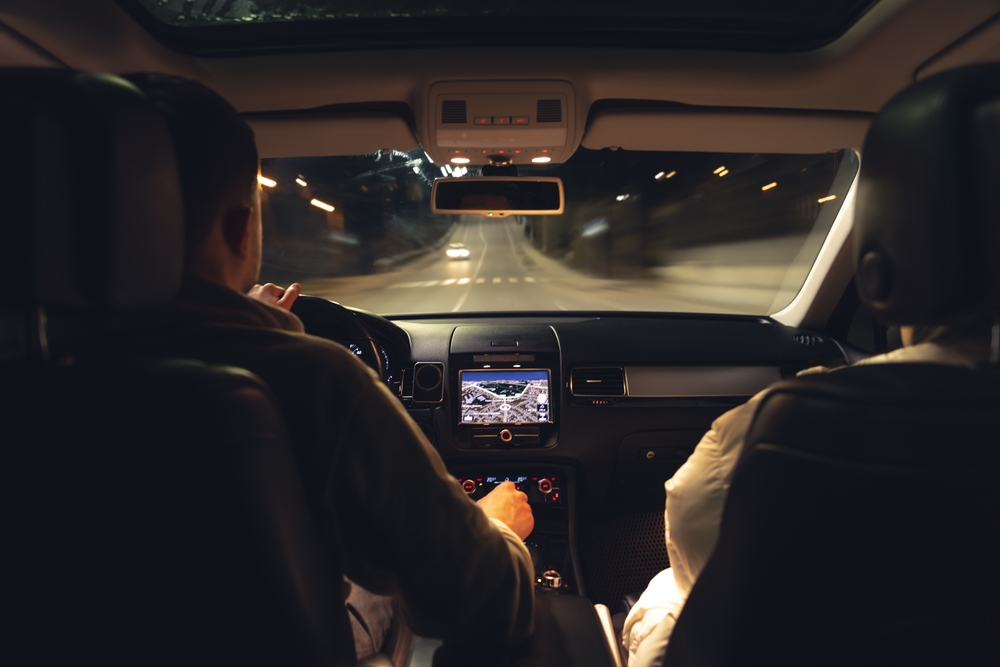
A recent ITV News article revealed that a significant number of motorists—around one in four—are reducing or avoiding night driving due to the glare from modern headlights. If you've experienced similar difficulties, the issue might not be the headlights themselves—it could be your vision.
Increased sensitivity to glare is a common symptom of cataracts, which cause the eye's natural lens to become cloudy over time. This cloudiness scatters light, creating halos and glare, particularly at night. Let's explore how cataracts impact night vision and what you can do to see clearly again.
Why do cataracts make night driving so challenging?
Cataracts develop when proteins in the eye's lens break down and clump together, resulting in clouded vision. While cataracts develop gradually, one of the first noticeable symptoms is trouble seeing clearly at night.
When headlights shine on a cataract-affected lens, the light doesn't pass through cleanly, unlike in a healthy eye where the lens focuses light precisely onto the retina for clear vision. Instead, it's scattered, creating blinding glare and halos that make it difficult to judge distances and spot potential hazards.
Recognising the signs of cataract-related night vision problems
If you're finding night driving increasingly uncomfortable, watch for these cataract symptoms:
- Glare and halos: Bright lights, like headlights and streetlights, may appear to have halos or starbursts around them.
- Blurry or cloudy vision: Objects might look blurry, even with glasses.
- Dulled colours: Colours appear less vibrant.
- Increased light sensitivity: Daytime sunlight and nighttime headlights feel more intense than before.
The impact of cataracts on nighttime driving safety
Cataracts don't just cause discomfort—they can compromise your safety. Poor night vision increases the risk of missing road signs, pedestrians, and other vehicles. The glare from headlights can also delay reaction times, particularly when turning at intersections or driving through poorly lit areas.
What can you do if cataracts are affecting your night vision?
The good news is that cataracts are treatable with a straightforward, modern procedure. Cataract procedures involve replacing the clouded lens with a clear, artificial one. The result? Sharper vision, reduced glare, and greater confidence behind the wheel.
Professor Paul Ursell is an expert in advanced cataract techniques that prioritise safety and precision, helping people regain their night vision and driving independence.
Take the first step
If you've noticed night glare or other changes in your vision, it might be time to act. Cataracts don't improve on their own—but you don't have to live with the inconvenience.
Take our quick, online self-test to check your suitability for cataract treatment. It only takes a few minutes and could be the first step to seeing clearly again, day or night.
Source:ITV News
Are you considering treatment?
If you’re in our area and would like to learn more about your options, our team would be happy to help. Drop us a line and we’ll call you back:
Home »
Are you suitable for vision correction surgery?
It isn’t suitable for everyone.
To find out more about your options, book a free video appointment with your Consultant Ophthalmic Surgeon:
Our most popular procedures
What our patients say…
★ ★ ★ ★ ★“Excellent result. Complete confidence in Paul Ursell. Quiet, quick, and efficient. Peaceful and comfortable hospital.”
 P.T
P.T★ ★ ★ ★ ★
“The cataract surgery on both of my eyes went very smoothly without any problems. There was no pain afterwards and I didn’t have to wear any eyepatch. I would highly recommend Professor Ursell for cataract surgery.”
 M.S
M.S★ ★ ★ ★ ★“Highly professional, extremely efficient, and an excellent communicator, Paul exudes experience, knowledge, and ability. The whole process — initial consultation, operation, and post-op check-up — was wonderfully stress-free. I now have 20/20 vision, am glasses-free, and I am delighted by the results.”
 S.B
S.B★ ★ ★ ★ ★
“The cataract surgery has completely changed my life. Mr. Ursell put me at ease and explained all options. The procedure was quick and painless and completely successful, and I now have 20/20 vision in my good eye. One of the reasons I had the surgery was because of Mr. Ursell’s standing and experience. Cannot praise highly enough.”
 D.S
D.S★ ★ ★ ★ ★
“I was very short-sighted and my cataracts badly affected both reading and distance acuity. After the operation I now have very good distance vision (glasses-free) but still need glasses for reading. (This was the expected outcome as I did not want multi-focus implants). The operation was quick and painless, and I had no post-operative discomfort at all (which surprised me). The results are remarkable.
I can certainly recommend Professor Ursell. He is a personable consultant and a skilled surgeon.”
 S.D
S.D★ ★ ★ ★ ★
“Dr. Paul Ursell squashed many of my concerns for not having cataract surgery. He offered comfort with examples of his long/distinguished career and new technology that he applies to the surgery.
Both before and after the surgery, Dr. Ursell and staff gave me the information and attention I needed. It was a great success, and I highly recommend Dr. Ursell.”
 PTO
PTOWe have replaced the images of real patients who provided these testimonials to protect their privacy.