Can cataracts develop after laser eye surgery?
Laser eye surgery has helped millions of people reduce their need for glasses. If you've had LASIK, PRK, or a similar procedure in the past, you may be wondering: Can I still get cataracts later in life?
The short answer is yes, pretty much always.
Laser vision correction reshapes the surface of the eye but does not prevent age-related changes to the natural lens inside the eye, which is where cataracts form. In this blog, we explain how cataracts can develop after laser eye surgery, how they’re treated, and what makes private cataract surgery with Professor Paul Ursell a trusted option for patients with a history of laser treatment.
What is laser eye surgery?
Laser eye surgery changes the shape of the cornea, the clear front surface of the eye. This corrects refractive errors like:
- Short-sightedness (myopia)
- Long-sightedness (hyperopia)
- Astigmatism.
It helps focus light more accurately on the retina, reducing the need for glasses or contact lenses.
However, laser surgery doesn’t affect the lens inside your eye. That lens, over time, will still develop cataracts.
What is a cataract?
A cataract is the clouding of the eye’s natural lens. This clouding develops gradually as part of the normal ageing process, and typically starts to affect people in their 60s or 70s.
Signs of cataracts include:
- Changes in your glasses prescription
- Blurry or hazy vision
- Glare around lights (especially when driving at night)
- Difficulty reading or recognising faces
- Faded colours.
Whether or not you’ve had laser vision correction in the past, everyone is at risk of cataracts as they age.
Can cataracts be treated after laser eye surgery?
Yes, they can and with excellent results.
Cataract surgery involves removing the cloudy natural lens and replacing it with a clear artificial intraocular lens (IOL). The procedure is safe, quick, and highly successful.
Even if you’ve had laser eye surgery years ago, cataract surgery is still an option. However, it’s important to choose a specialist like Professor Paul Ursell, who has experience treating patients with complex vision histories.
What’s different about cataract surgery after laser eye surgery?
The surgery itself is the same but choosing the right lens implant becomes more complex.
Laser surgery changes the shape of your cornea, which can make it harder to calculate the perfect lens power. If these measurements are even slightly off, your vision result may not be as clear as expected.
In private care, you’ll benefit from:
- Advanced diagnostic scans
- Personalised calculations based on your prior laser surgery
- A wider selection of premium lenses
- Consultant-led care from start to finish.
Professor Ursell uses sophisticated imaging and techniques to fine-tune your lens choice, so you get the best visual outcome possible.
Can I still choose a premium lens?
Yes. If you're suitable, you can still opt for:
- Monofocal lenses (for one clear distance)
- Multifocal or trifocal lenses (to reduce your dependence on glasses)
- Toric lenses (to correct astigmatism).
During your consultation, Professor Ursell will review your prior vision correction, lifestyle needs, and eye health before recommending the best lens.
Is the risk of complications higher after laser eye surgery?
With an experienced surgeon and the right planning, the risks are very low. However, because the cornea has been altered by laser treatment, certain calculations can be less predictable.
That’s why private cataract surgery with a specialist is strongly advised. Professor Ursell’s experience means he can adjust for these variables and minimise risk.
What are the results like?
Most patients are thrilled with their results. In fact, many say their vision is better than it was after their laser eye surgery.
Cataract removal also restores contrast and colour, helping you enjoy reading, driving, and daily life again, often without the need for glasses.
Final thoughts
Yes, cataracts will still develop after laser eye surgery. But with the right care, they can be treated safely and successfully.
If you're starting to notice cloudy vision, glare, or struggling with glasses again, it may be time to consider cataract surgery.
Take our suitability self-test to see if you’re ready for private cataract surgery with Professor Paul Ursell.
Are you considering treatment?
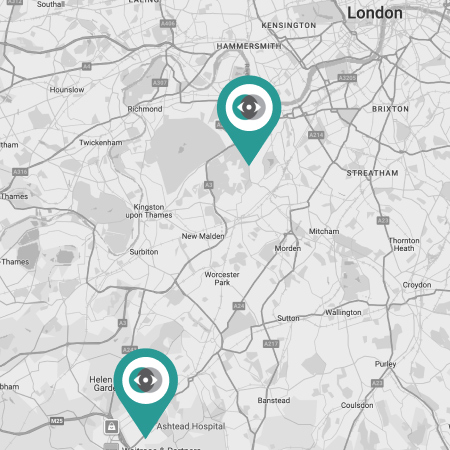
If you’re in our area and would like to learn more about your options, our team would be happy to help. Drop us a line and we’ll call you back:
[wpseo_breadcrumb]
Are you suitable for vision correction surgery?
It isn’t suitable for everyone.
To find out more about your options, book a free video appointment with your Consultant Ophthalmic Surgeon:
Our most popular procedures
What our patients say…
★ ★ ★ ★ ★“Excellent result. Complete confidence in Paul Ursell. Quiet, quick, and efficient. Peaceful and comfortable hospital.”
 P.T
P.T★ ★ ★ ★ ★
“The cataract surgery on both of my eyes went very smoothly without any problems. There was no pain afterwards and I didn’t have to wear any eyepatch. I would highly recommend Professor Ursell for cataract surgery.”
 M.S
M.S★ ★ ★ ★ ★“Highly professional, extremely efficient, and an excellent communicator, Paul exudes experience, knowledge, and ability. The whole process — initial consultation, operation, and post-op check-up — was wonderfully stress-free. I now have 20/20 vision, am glasses-free, and I am delighted by the results.”
 S.B
S.B★ ★ ★ ★ ★
“The cataract surgery has completely changed my life. Mr. Ursell put me at ease and explained all options. The procedure was quick and painless and completely successful, and I now have 20/20 vision in my good eye. One of the reasons I had the surgery was because of Mr. Ursell’s standing and experience. Cannot praise highly enough.”
 D.S
D.S★ ★ ★ ★ ★
“I was very short-sighted and my cataracts badly affected both reading and distance acuity. After the operation I now have very good distance vision (glasses-free) but still need glasses for reading. (This was the expected outcome as I did not want multi-focus implants). The operation was quick and painless, and I had no post-operative discomfort at all (which surprised me). The results are remarkable.
I can certainly recommend Professor Ursell. He is a personable consultant and a skilled surgeon.”
 S.D
S.D★ ★ ★ ★ ★
“Dr. Paul Ursell squashed many of my concerns for not having cataract surgery. He offered comfort with examples of his long/distinguished career and new technology that he applies to the surgery.
Both before and after the surgery, Dr. Ursell and staff gave me the information and attention I needed. It was a great success, and I highly recommend Dr. Ursell.”
 PTO
PTOWe have replaced the images of real patients who provided these testimonials to protect their privacy.