What causes blindness after cataract surgery?
Cataract surgery is one of the most successful procedures in modern medicine. Most people experience a quick recovery and clear vision. But naturally, people worry about the risks—including the rare possibility of blindness.
Let’s be clear: permanent blindness after cataract surgery is extremely rare. But if you’re facing the decision to have cataract surgery, it’s important to understand what can go wrong—and what steps are taken to prevent it.
Infections (Endophthalmitis)
The most serious complication that can lead to blindness is a severe infection inside the eye called endophthalmitis. It’s very rare—occurring in about 1 in 10,000 to 1 in 20,000 cases—but it can cause permanent damage if not treated quickly.
What causes blindness after cataract surgery?
Bacteria can enter the eye during surgery or in the first few days after.
What are the signs?
Pain, redness, blurred vision, or increasing discomfort after surgery. If you have these symptoms, it’s vital to be seen urgently.
How is it prevented?
Every step in modern cataract surgery is designed to prevent infection. This includes using sterile equipment, antiseptic eye drops, and often antibiotic injections at the end of the procedure. Patients are also given antibiotic eye drops to use at home.
Retinal detachment
This is when the retina (the light-sensitive layer at the back of the eye) pulls away from the wall of the eye. It can cause permanent vision loss if not treated promptly.
How common is it?
Retinal detachment happens in about 1 in 1,000 cataract surgeries. The risk is slightly higher in people who are very short-sighted (high myopia).
What are the signs?
Flashes of light, a sudden shower of floaters, or a dark curtain coming across your vision.
How is it treated?
Retinal detachment is a surgical emergency. If treated early, vision can often be saved.
Swelling in the Retina (Cystoid Macular Oedema)
Some people develop swelling at the centre of the retina, known as cystoid macular oedema. It can cause blurry or distorted central vision after surgery.
Is it permanent?
Usually not. In most cases, it improves with anti-inflammatory drops or other treatment.
How is it prevented?
Patients at higher risk may be given anti-inflammatory medication around the time of surgery to reduce this risk.
Problems with the optic nerve
In people with glaucoma or certain types of eye disease, cataract surgery may sometimes worsen existing damage to the optic nerve. This is rare but can lead to permanent vision loss in extreme cases.
Other serious medical eye conditions
It’s important to remember that cataract surgery can’t fix every eye problem. If someone has an advanced eye disease—like late-stage macular degeneration or severe diabetic eye disease—they may not see well even after the cataract is removed. In some cases, these conditions may continue to worsen after surgery, even if the cataract surgery itself goes smoothly.
What can you do to reduce your risk?
- Choose an experienced surgeon. Like Professor Paul Ursell, who has performed thousands of successful cataract procedures.
- Follow pre-op and post-op instructions carefully. This includes using all prescribed drops and attending your follow-up appointments.
- Inform your surgeon of any medical conditions. Including diabetes, glaucoma, or a history of eye disease.
- Seek urgent help if something doesn’t feel right. You know your body best. If something feels off, don’t wait—get checked.
Blindness after cataract surgery is very rare. For most people, cataract surgery leads to a dramatic improvement in vision and quality of life. But like all medical procedures, there are risks. Knowing what they are—and choosing a surgeon who prioritises your safety—is the best way to protect your sight.
Worried about cataract surgery?
Take our quick self-test to see if you're suitable and learn more about what to expect.
Are you considering treatment?
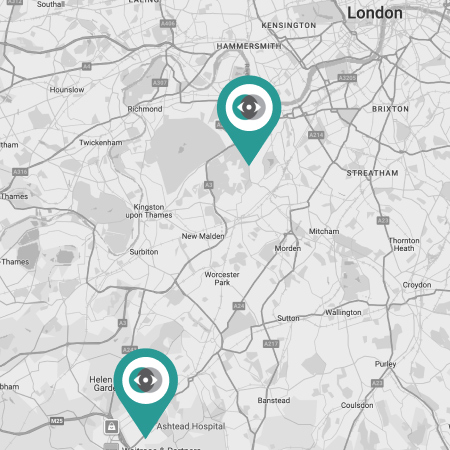
If you’re in our area and would like to learn more about your options, our team would be happy to help. Drop us a line and we’ll call you back:
Home »
Are you suitable for vision correction surgery?
It isn’t suitable for everyone.
To find out more about your options, book a free video appointment with your Consultant Ophthalmic Surgeon:
Our most popular procedures
What our patients say…
★ ★ ★ ★ ★“Excellent result. Complete confidence in Paul Ursell. Quiet, quick, and efficient. Peaceful and comfortable hospital.”
 P.T
P.T★ ★ ★ ★ ★
“The cataract surgery on both of my eyes went very smoothly without any problems. There was no pain afterwards and I didn’t have to wear any eyepatch. I would highly recommend Professor Ursell for cataract surgery.”
 M.S
M.S★ ★ ★ ★ ★“Highly professional, extremely efficient, and an excellent communicator, Paul exudes experience, knowledge, and ability. The whole process — initial consultation, operation, and post-op check-up — was wonderfully stress-free. I now have 20/20 vision, am glasses-free, and I am delighted by the results.”
 S.B
S.B★ ★ ★ ★ ★
“The cataract surgery has completely changed my life. Mr. Ursell put me at ease and explained all options. The procedure was quick and painless and completely successful, and I now have 20/20 vision in my good eye. One of the reasons I had the surgery was because of Mr. Ursell’s standing and experience. Cannot praise highly enough.”
 D.S
D.S★ ★ ★ ★ ★
“I was very short-sighted and my cataracts badly affected both reading and distance acuity. After the operation I now have very good distance vision (glasses-free) but still need glasses for reading. (This was the expected outcome as I did not want multi-focus implants). The operation was quick and painless, and I had no post-operative discomfort at all (which surprised me). The results are remarkable.
I can certainly recommend Professor Ursell. He is a personable consultant and a skilled surgeon.”
 S.D
S.D★ ★ ★ ★ ★
“Dr. Paul Ursell squashed many of my concerns for not having cataract surgery. He offered comfort with examples of his long/distinguished career and new technology that he applies to the surgery.
Both before and after the surgery, Dr. Ursell and staff gave me the information and attention I needed. It was a great success, and I highly recommend Dr. Ursell.”
 PTO
PTOWe have replaced the images of real patients who provided these testimonials to protect their privacy.