Does Private Medical Insurance Cover Cataract Surgery?
If you have cataracts, you probably want treatment sooner rather than later. Many people already have health cover, through work or privately, so one of the first questions we hear is: does private medical insurance cover cataract surgery?
Often, yes. But it depends on your policy, when your symptoms started, and which lens you choose.
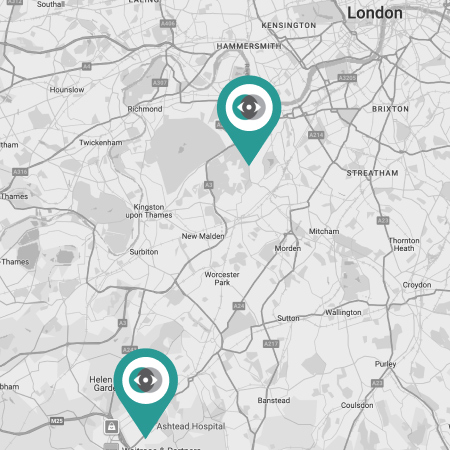
This post explains what private health insurance usually covers, what it tends to leave out, and how to use your policy with us at Parkside Hospital in Wimbledon or Ashtead Hospital in Surrey.
Does private medical insurance cover cataract surgery?
In many cases, yes. Cataract surgery is one of the most common operations in the UK, and most private health insurance policies treat it like any other planned surgery. As Bupa explains, cataract surgery is often covered, and standard cover includes a clear artificial replacement lens.
The cover isn't automatic, though. Whether your insurer pays usually comes down to four things:
- The lens you choose. A standard lens is usually covered. Premium lenses that reduce your need for glasses often aren't.
- When your symptoms started. Insurers don't usually cover conditions you had before your policy began.
- Your level of cover. Some policies include outpatient appointments. Others only cover the surgery.
- Your policy rules. These include your excess, hospital list and any NHS waiting time options.
We look at each of these below, starting with lenses.
Does insurance cover premium lenses for cataract surgery?
During cataract surgery, Professor Ursell removes your cloudy lens and replaces it with a clear artificial one. You can choose from different types of lens:
- Monofocal (standard) lens: gives clear vision at one distance, usually far away. Most people still need reading glasses.
- Toric lens: corrects astigmatism, where the front of the eye is shaped more like a rugby ball than a football. You're likely to need glasses less.
- Multifocal or extended depth of focus (EDOF) lens: corrects distance, middle and reading vision, so many people no longer need glasses for most of the day.
Most insurers cover a standard monofocal lens. Toric, multifocal and EDOF lenses are often seen as upgrades, so your insurer may pay part of the cost, or none of it.
If you choose a premium lens, you may be able to pay the difference yourself. This is often called a "top-up". Your insurer may also not cover any extra tests a premium lens needs.
At your consultation, Professor Ursell talks through which lens suits your eyes and lifestyle, and we'll be clear about any costs your insurer is unlikely to cover before you decide. Not sure which lens is right for you? Our quick lens suitability self-test can help.
What does private health insurance usually cover for cataract surgery?
Every policy is different, but this is what we typically see when patients come to us with private health insurance.
What is outpatient cover?
Outpatient cover pays for hospital visits where you don't stay overnight. For cataract patients, that means your first consultation, your eye scans and your check-ups after surgery.
Cataract surgery is a day-case procedure, so you come in, have your surgery and go home the same day. That makes outpatient cover important. Without it, you may have to pay for some appointments yourself, even if your insurer pays for the surgery.
Will insurance cover cataracts if I already have them?
This is the most common reason a cataract claim is turned down. Private medical insurance is designed for new conditions and doesn't usually cover problems you had before your policy started.
Cataracts develop slowly. You may have had blurry vision, glare or faded colours for some time before you were diagnosed, and your insurer may count those early symptoms, not just the date of diagnosis.
How this works depends on how your policy was underwritten. There are two main types.
1. Moratorium underwriting
This is a popular choice for personal policies. You don't fill in a full health form when you join. Your insurer checks your history when you make a claim instead.
As a typical example, WPA's policy terms say no benefit is paid for at least two years for conditions you had in the five years before joining. After that, a condition may become eligible if you go two years in a row with no symptoms, treatment or advice for it. Cataracts don't go away on their own, so this can be hard to meet.
2. Full medical underwriting
With this type, you share your full medical history when you join, and your insurer tells you up front what's excluded. If cataracts or eye problems were listed as an exclusion, your policy won't cover cataract surgery.
What about company health insurance?
Some larger employer schemes use "medical history disregarded" underwriting, which means pre-existing conditions can be covered. If you have cover through work, it's worth checking which type you have.
If you're not sure, ask your insurer whether cataract surgery is covered for you. You can do this after booking your consultation with us (see the steps below).
Other policy rules that can affect your cataract claim
Even if cataract surgery is covered, a few other parts of your policy can change what you pay or where you go.
Your excess
Most policies have an excess. This is the amount you pay towards a claim before your insurer pays the rest. A higher excess means lower monthly payments, but more to pay when you claim.
The six-week option
Some policies include a "six-week option" to lower the cost of cover. If the NHS can treat you within six weeks, you use the NHS. If the wait is longer, your private cover kicks in.
Hospital lists
Your policy may only let you use certain hospitals. Check that Parkside Hospital in Wimbledon or Ashtead Hospital in Surrey is on your list.
Guided or consultant-selected options
Some policies are "guided", which means your insurer gives you a shortlist of specialists. If you want to be treated by Professor Ursell, book your consultation with us first and then tell your insurer who you've chosen. It's much easier to ask for a named surgeon once you're already booked in.
How to use your private health insurance for cataract surgery with Professor Paul Ursell
Using your insurance is usually simple. Here are the steps most of our insured patients follow.
- Book your consultation. Book online or call us on 0204 580 2020, and have your policy number ready if you have it. Booking with us first means you've already chosen your surgeon before you speak to your insurer. If you'd rather start with a conversation, you can book a free video appointment with Professor Ursell instead.
- Get a referral. Most insurers ask for a referral from your GP or optician. Ask them for a letter that mentions your cataracts. Our guide on whether you need a referral explains more.
- Call your insurer. Tell them you've booked a consultation for cataracts with Professor Paul Ursell. Ask if you're covered, and get a pre-authorisation number.
- Come to your consultation. Professor Ursell examines your eyes, takes detailed scans and talks through your lens options. If surgery is right for you, we explain the next steps.
- Get your surgery approved. Call your insurer again with the details we give you. They'll confirm what they cover for the surgery itself.
- Have your surgery. Professor Ursell uses his no needle, no patch technique, so there's no injection and no patch, and you go home the same day. Most patients are back to normal activities the next day, and your follow-up appointments are booked in for you.
Always get approval from your insurer before your consultation and before your surgery. If you go ahead without it, your insurer may not pay.
What if my insurance won't cover cataract surgery?
If your insurer says no, you still have options. Many of our patients choose to pay for their cataract surgery themselves.
Our prices are per eye and include the surgeon's fee, the hospital fees, your lens and four weeks of follow-up appointments.
You can also spread the cost over 24 months at 0% interest, with no deposit and no early repayment fees:
- Parkside: £131 a month for standard, £164 for toric and £181 for multifocal
- Ashtead: £121 a month for standard, £160 for toric and £186 for multifocal
These are guide prices. Some eye conditions can affect the final cost, and we confirm your price at your consultation. See our pricing page for the latest details.
When you pay for yourself, you can also choose the lens that best suits your eyes, with no insurer limits.
Common questions about insurance and cataract surgery
Thinking about private cataract surgery?
Whether you're using private medical insurance or paying for yourself, we're here to help. Professor Ursell has carried out more than 12,000 eye surgeries and sees patients at our hospitals in Wimbledon and Surrey.
If you're not sure whether cataract surgery is right for you, start with our quick cataract suitability self-test. It only takes a minute.
Or, if you're ready to talk, book a consultation or call our team on 0204 580 2020. We're happy to help you understand your options, including how your insurance can work with us.
Are you considering treatment?
If you’re in our area and would like to learn more about your options, our team would be happy to help. Drop us a line and we’ll call you back:
[wpseo_breadcrumb]
Are you suitable for vision correction surgery?
It isn’t suitable for everyone.
To find out more about your options, book a free video appointment with your Consultant Ophthalmic Surgeon:
Our most popular procedures
What our patients say…
★ ★ ★ ★ ★“Excellent result. Complete confidence in Paul Ursell. Quiet, quick, and efficient. Peaceful and comfortable hospital.”
 P.T
★ ★ ★ ★ ★
“The cataract surgery on both of my eyes went very smoothly without any problems. There was no pain afterwards and I didn’t have to wear any eyepatch. I would highly recommend Professor Ursell for cataract surgery.”
 M.S
★ ★ ★ ★ ★“Highly professional, extremely efficient, and an excellent communicator, Paul exudes experience, knowledge, and ability. The whole process — initial consultation, operation, and post-op check-up — was wonderfully stress-free. I now have 20/20 vision, am glasses-free, and I am delighted by the results.”
 S.B
★ ★ ★ ★ ★
“The cataract surgery has completely changed my life. Mr. Ursell put me at ease and explained all options. The procedure was quick and painless and completely successful, and I now have 20/20 vision in my good eye. One of the reasons I had the surgery was because of Mr. Ursell’s standing and experience. Cannot praise highly enough.”
 D.S
★ ★ ★ ★ ★
“I was very short-sighted and my cataracts badly affected both reading and distance acuity. After the operation I now have very good distance vision (glasses-free) but still need glasses for reading. (This was the expected outcome as I did not want multi-focus implants). The operation was quick and painless, and I had no post-operative discomfort at all (which surprised me). The results are remarkable.
I can certainly recommend Professor Ursell. He is a personable consultant and a skilled surgeon.”
 S.D
★ ★ ★ ★ ★
“Dr. Paul Ursell squashed many of my concerns for not having cataract surgery. He offered comfort with examples of his long/distinguished career and new technology that he applies to the surgery.
Both before and after the surgery, Dr. Ursell and staff gave me the information and attention I needed. It was a great success, and I highly recommend Dr. Ursell.”
 PTO
We have replaced the images of real patients who provided these testimonials to protect their privacy.